
Wednesday, July 10, 2024

Nikola Tesla: The Visionary Behind Modern Electricity


Nikola Tesla: The Visionary Behind Modern Electricity

👆👆👆👆

"Nikola Tesla: The Visionary Behind Modern Electricity"


Born on July 10, 1856, in Smiljan, Croatia, Nikola Tesla was a visionary inventor and electrical engineer whose groundbreaking work has left an indelible mark on modern technology. Tesla is best known for his pioneering contributions to the development of alternating current (AC) electrical systems, which revolutionized the way electricity is generated, transmitted, and utilized.

Tesla’s early work included the invention of the induction motor and transformer, which played a crucial role in the widespread adoption of AC power. His innovative AC system allowed for the efficient transmission of electricity over long distances, far surpassing the capabilities of direct current (DC) systems championed by his contemporary, Thomas Edison. This breakthrough was instrumental in powering the burgeoning cities and industries of the early 20th century.

In addition to his work with AC power, Tesla held numerous patents and made significant advancements in various fields. Some of his notable inventions include the Tesla coil, which is still used in radio technology and medical devices today, and early contributions to wireless communication and radar technology. Tesla’s visionary ideas even extended to the concept of wireless energy transfer, which he demonstrated with his famous experiments at the Wardenclyffe Tower.

Despite facing numerous challenges and financial difficulties throughout his life, Tesla’s legacy endures. His work has inspired countless innovations and continues to influence modern science and engineering. Tesla’s name is synonymous with innovation, creativity, and the relentless pursuit of knowledge.

Nikola Tesla passed away on January 7, 1943, but his contributions to science and technology remain a cornerstone of our modern world. As we celebrate his birthday, we honor the extraordinary mind that helped shape the future of electricity and technology.

Tuesday, July 9, 2024

India’s First Engineer: The Visionary Legacy of Sir Mokshagundam Visvesvaraya


India’s First Engineer: The Visionary Legacy of Sir Mokshagundam Visvesvaraya

👆👆👆👆

"India’s First Engineer: The Visionary Legacy of Sir Mokshagundam Visvesvaraya"

India's journey into the modern era of engineering and infrastructure owes much to the pioneering contributions of Mokshagundam Visvesvaraya, often revered as India's first engineer. His life and achievements not only laid the foundation for the nation's technological advancements but also inspired countless individuals to pursue careers in engineering and public service.

"Early Life and Education"

Mokshagundam Visvesvaraya, fondly known as Sir MV, was born on September 15, 1861, in Muddenahalli, a small village in the Kingdom of Mysore, now in Karnataka. Despite facing financial hardships, he excelled in academics. His remarkable aptitude for learning secured him a spot at the prestigious College of Engineering, Pune, where he graduated with a degree in civil engineering in 1883.

"Professional Journey"

Sir MV's professional journey began with the Public Works Department of Bombay (now Mumbai), where his talent quickly became evident. His innovative approach and meticulous work ethic distinguished him from his peers. One of his early notable projects was the implementation of a complex irrigation system in the Deccan area, which greatly benefited the local agriculture.

"Landmark Achievements"

"Krishna Raja Sagara Dam"

One of Sir MV's crowning achievements was the construction of the Krishna Raja Sagara Dam in Mandya, Karnataka. Completed in 1931, this project was a testament to his engineering brilliance. The dam not only provided essential water for irrigation but also facilitated hydroelectric power generation, revolutionizing the region's agriculture and economy.

"Flood Control and Drainage Systems"

Sir MV's expertise was not confined to dams and irrigation. His design of flood control and drainage systems in Hyderabad significantly reduced the city's vulnerability to flooding. His strategic planning and engineering solutions were ahead of their time, showcasing his ability to address complex urban challenges.

"Tata Steel Plant"

In addition to his contributions to civil engineering, Sir MV played a pivotal role in the establishment of the Tata Steel Plant in Jamshedpur. As an advisor, his guidance was instrumental in setting up one of India's largest and most successful industrial enterprises. This endeavor marked a significant step in India's industrialization and economic development.

"Honors and Legacy"

For his exceptional contributions, Sir MV was knighted by the British Government in 1915, earning the title "Sir." In 1955, he was awarded the Bharat Ratna, India's highest civilian award, in recognition of his unparalleled contributions to engineering and public service.

Sir MV's legacy extends beyond his engineering feats. He was a visionary who believed in the power of education and knowledge. His emphasis on technical education led to the establishment of numerous engineering colleges across India. His birthday, September 15, is celebrated as Engineers' Day in India, honoring his enduring impact on the field of engineering.

"Conclusion"

Mokshagundam Visvesvaraya's life is a beacon of inspiration for aspiring engineers and visionaries. His dedication, innovative spirit, and unwavering commitment to nation-building set a benchmark for excellence. As India continues to advance technologically, the foundational work of its first engineer, Sir MV, remains a guiding light, reminding us of the transformative power of engineering and ingenuity.

Sunday, July 7, 2024

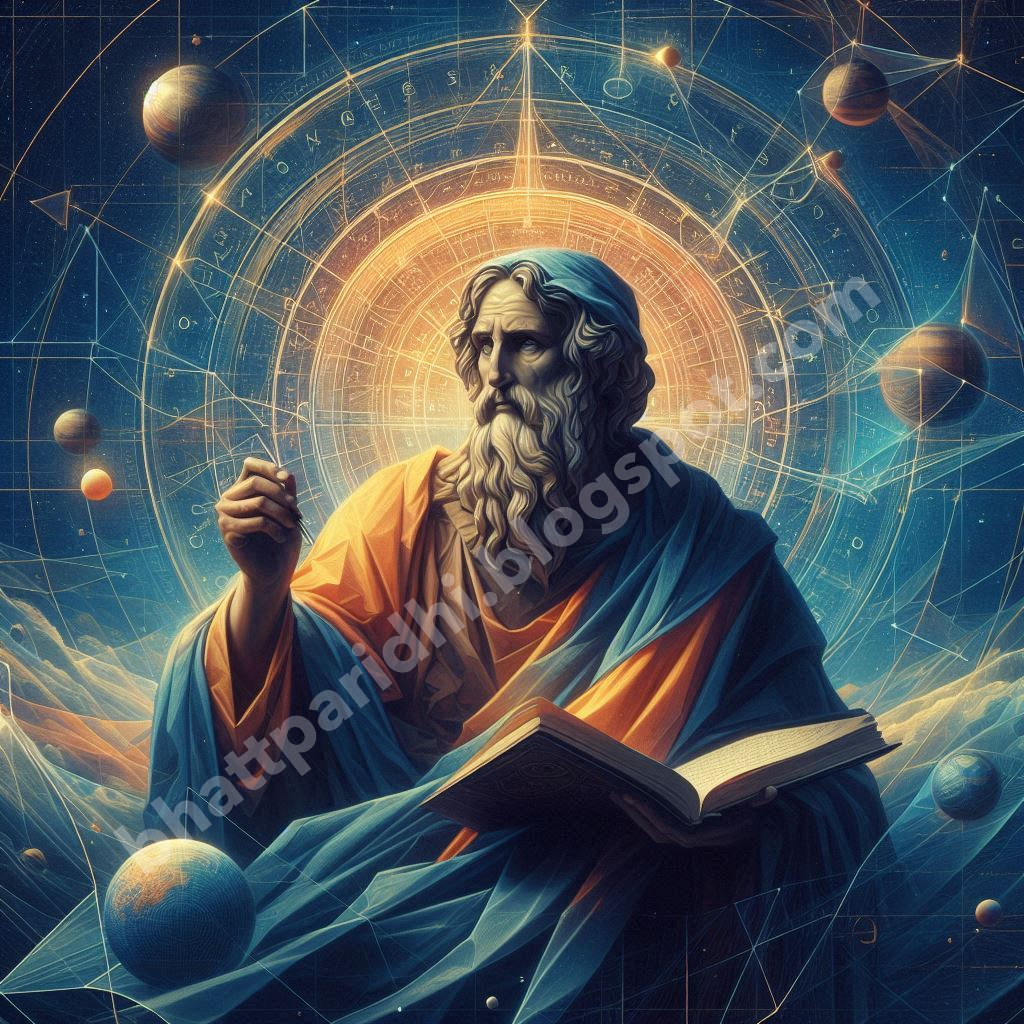
The Legacy of Pythagoras: Geometry’s Timeless Sage


The Legacy of Pythagoras: Geometry’s Timeless Sage

👆👆👆👆

"The Legacy of Pythagoras: Geometry’s Timeless Sage"

Pythagoras of Samos was an ancient Greek philosopher and mathematician who lived from around 570 to 495 BCE. He is best known for the Pythagorean theorem, which is fundamental in geometry, but his influence extends far beyond that single accomplishment. Here’s a brief overview of his life and contributions:

"Early Life and Travels"

Pythagoras was born on the island of Samos in the Aegean Sea. Little is known about his early life, but it is believed that he traveled extensively in his youth, visiting Egypt, Babylonia, and possibly India. These travels exposed him to a variety of mathematical and philosophical ideas, which he later integrated into his own teachings.

"Establishing the Pythagorean School"

Around 530 BCE, Pythagoras moved to the Greek colony of Croton in southern Italy, where he established a religious and philosophical school. The Pythagorean Brotherhood, as it was called, was both a scientific community and a religious sect. Members followed strict rules, including a vegetarian diet and a belief in the transmigration of souls (reincarnation).

"Pythagorean Theorem"

The most famous contribution attributed to Pythagoras is the Pythagorean theorem, which states that in a right-angled triangle, the square of the hypotenuse is equal to the sum of the squares of the other two sides. Although this theorem was known to the Babylonians long before Pythagoras, he and his followers were the first to provide a formal proof.

"Mathematical Contributions"

Beyond the Pythagorean theorem, Pythagoras and his followers made significant contributions to mathematics, including:

  • The concept of numerical relationships in music, where they discovered the connection between the length of strings and musical pitch.
  • The study of proportions and ratios.
  • The belief that numbers have inherent properties and that the universe can be understood through mathematics.
"Philosophical and Scientific Beliefs"

Pythagoras and his followers believed that reality is fundamentally mathematical in nature. They held that numbers and their relationships underpin the structure of the universe. This idea influenced later philosophical thought, including the works of Plato.

"Legacy"

Pythagoras's influence persisted long after his death. His mathematical and philosophical ideas were foundational for later developments in Greek philosophy and science. The Pythagorean Brotherhood continued to exist for some time after his death, and his teachings were passed down through generations.

While many of the details of Pythagoras's life are shrouded in legend and myth, his contributions to mathematics, philosophy, and the scientific understanding of the world remain significant. His legacy endures, highlighting the enduring power of mathematical thought and inquiry.

Friday, July 5, 2024

Marie Curie: Pioneer in Science and Nobel Laureate

Marie Curie: Pioneer in Science and Nobel Laureate

👆👆👆👆

"Marie Curie: Pioneer in Science and Nobel Laureate"

Marie Curie, born Maria Skłodowska on November 7, 1867, in Warsaw, Poland, is celebrated as one of the most influential scientists in history. She made groundbreaking discoveries in the field of radioactivity, a term she coined herself. Curie discovered two radioactive elements, polonium and radium, significantly advancing the scientific understanding of atomic physics.

Her exceptional work earned her two Nobel Prizes in different scientific fields. In 1903, she received the Nobel Prize in Physics, shared with her husband Pierre Curie and physicist Henri Becquerel, for their collective research on radiation. In 1911, she was awarded the Nobel Prize in Chemistry for her discovery of radium and polonium, making her the first person to win Nobel Prizes in two different fields.

Marie Curie's dedication to science went beyond her research. During World War I, she developed mobile radiography units, known as "Little Curies," to assist in medical diagnoses on the battlefield, saving countless lives.

Curie's legacy lives on through her pioneering work, inspiring generations of scientists, especially women in STEM. Her contributions have had a lasting impact on medicine, physics, and chemistry, cementing her place as a true icon in the world of science.

Marie Curie's journey began with her education in Poland, where she excelled in her studies despite the challenges of being a woman in a male-dominated field. She moved to Paris to continue her education at the University of Paris (Sorbonne), where she met Pierre Curie. Together, they conducted extensive research on radioactive substances, leading to their discovery of radium and polonium.

Their collaboration was marked by mutual respect and a shared passion for science. Tragically, Pierre Curie died in a road accident in 1906, but Marie continued their work, driven by a relentless curiosity and determination to advance scientific knowledge.

In addition to her scientific achievements, Curie faced numerous challenges and overcame significant barriers as a woman in science. She often worked in poor conditions, handling radioactive materials without modern safety protocols, which ultimately contributed to her death from aplastic anemia in 1934. Despite these hardships, her perseverance and dedication to science never wavered.

Marie Curie's legacy extends beyond her discoveries. She founded the Radium Institute (now the Curie Institute) in Paris, a leading research center in oncology and medical physics. Her life and work continue to inspire countless individuals around the world, highlighting the importance of scientific inquiry and the contributions of women to science.

Wednesday, July 3, 2024

Gloria Ramirez: Pioneer in Radioactivity Research and Human Health

Text-to-Speech with Highlighting

👆👆👆👆

"Gloria Ramirez: Pioneer in Radioactivity Research and Human Health"


Born on April 4, 1910, Gloria Ramirez was a remarkable chemist whose pioneering research on radioactivity and its effects on human health has left an indelible mark on the scientific community. Her groundbreaking work laid the foundation for our current understanding of how radioactive substances interact with biological systems, influencing both safety protocols and medical treatments involving radioactive materials.


"Early Life and Education"

Gloria Ramirez's interest in chemistry began at an early age. Growing up in a time when opportunities for women in science were limited, she was determined to pursue her passion. She excelled in her studies and earned a scholarship to attend a prestigious university, where she focused on chemistry and physics. Her exceptional academic performance and keen interest in radioactivity caught the attention of her professors, who encouraged her to delve deeper into this emerging field.


"Groundbreaking Research"

Ramirez's research career took off when she joined a leading research institution known for its work on radioactivity. She was particularly interested in the health implications of exposure to radioactive substances, a concern that was gaining prominence due to the increased use of radiation in medical treatments and the development of nuclear technology.

One of her most significant contributions was her study on the effects of low-dose radiation on human cells. Ramirez meticulously documented how even small amounts of radiation could cause changes at the cellular level, potentially leading to long-term health consequences. Her work was among the first to highlight the importance of safety measures for workers handling radioactive materials and for patients undergoing radiation therapy.


"Legacy and Impact"

Gloria Ramirez's research has had a profound impact on various fields, including medicine, occupational health, and environmental science. Her findings helped shape regulations and safety standards for radiation exposure, ensuring better protection for both workers and the general public. Additionally, her work provided valuable insights for the development of more effective and safer radiation therapies for cancer treatment.

Beyond her scientific achievements, Ramirez was a passionate advocate for women in science. She mentored numerous young women, encouraging them to pursue careers in scientific research and breaking down barriers for future generations.


"Conclusion"

Gloria Ramirez's dedication to understanding the effects of radioactivity on human health has left a lasting legacy. Her pioneering research continues to influence safety standards and medical practices, underscoring the critical importance of her contributions to science and public health. As we remember her remarkable life and work, we are reminded of the power of determination and curiosity in advancing human knowledge and well-being.

Friday, June 28, 2024

Thomas Alva Edison: The Genius Behind the Lightbulb

Thomas Alva Edison: The Genius Behind the Lightbulb

👆👆👆👆

"THOMAS ALVA EDISON: THE GENIUS BEHIND THE LIGHTBULB"


Thomas Alva Edison is a name synonymous with innovation and perseverance. As one of the greatest inventors in history, Edison’s contributions to technology and society are unparalleled. However, behind his numerous achievements lies a remarkable story of determination, deeply influenced by his early life, particularly his relationship with his mother and his experiences at school.


"EARLY LIFE AND SCHOOLING"

Born on February 11, 1847, in Milan, Ohio, Thomas Edison was the youngest of seven children. His family later moved to Port Huron, Michigan, where Edison spent most of his childhood. From an early age, Edison exhibited a curious mind and a keen interest in understanding how things worked.

Edison’s formal education was brief and tumultuous. At the age of seven, he was enrolled in a local public school. However, his unconventional approach to learning and constant questioning did not sit well with his teachers. In fact, his teacher once referred to him as "addled," implying that Edison had a confused or disordered mind. This incident marked a turning point in Edison’s life.


"THE CRUCIAL ROLE OF NANCY EDISON"

Edison’s mother, Nancy Matthews Elliott, played a pivotal role in shaping his future. Upon hearing about the teacher’s harsh words, Nancy was outraged. She promptly withdrew her son from the school, deciding to educate him at home. Nancy’s belief in her son’s potential was unwavering. She nurtured his inquisitive nature and encouraged his interests in reading and experimenting.

Nancy Edison’s faith in her son was instrumental in his development. She provided him with books on a wide range of subjects, from science to literature, and allowed him to conduct experiments in a small laboratory she set up for him. This supportive environment fostered Edison’s love for learning and experimentation, laying the foundation for his future inventions.


THE RISE OF A GREAT INVENTOR

Edison’s early experiences with his mother and his self-directed education had a profound impact on his career. By the age of 12, he was working as a newsboy on the Grand Trunk Railroad, where he set up a small laboratory in a baggage car. Despite facing numerous challenges, including partial deafness from a bout of scarlet fever and a train accident, Edison’s determination never wavered.

Throughout his life, Edison’s relentless pursuit of knowledge and innovation led to over 1,000 patents. His most famous invention, the practical incandescent lightbulb, revolutionized the way people lived and worked. Other notable inventions include the phonograph, the motion picture camera, and improvements to the telegraph and telephone.


LEGACY AND LESSONS

Thomas Edison’s journey from a misunderstood schoolboy to one of the greatest inventors of all time is a testament to the power of perseverance and the importance of a supportive environment. His mother’s unwavering belief in his abilities and her dedication to his education were crucial in unlocking his potential.

Edison’s story serves as an inspiration, reminding us that with curiosity, resilience, and the right support, great things can be achieved. His legacy continues to illuminate our world, both literally and figuratively, highlighting the profound impact one individual can have on society.

In conclusion, Thomas Alva Edison’s life is a remarkable narrative of how early influences, particularly the support and belief of a mother, can shape the destiny of a genius. His story underscores the importance of nurturing and believing in the potential of every child, as they may one day change the world.

Wednesday, June 26, 2024

Electrifying Curiosity: The Inspiring Journey of Michael Faraday 🌟


🌟Electrifying Curiosity: The Inspiring Journey of Michael Faraday 🌟

Introduction:
Michael Faraday, a name synonymous with the discovery of electromagnetic induction, revolutionized the world with his groundbreaking contributions to science. Born into humble beginnings on September 22, 1791, in Newington Butts, England, Faraday's journey from a bookbinder’s apprentice to one of the most influential scientists of the 19th century is nothing short of inspiring. His relentless curiosity, coupled with an insatiable drive to understand the natural world, paved the way for advancements that underpin modern electrical engineering and physics.

Early Life and Education:
Faraday's early life was marked by financial struggles. His father, a blacksmith, and his mother, a domestic servant, could not afford formal education for young Michael. However, his voracious appetite for knowledge led him to self-education. At the age of 14, Faraday apprenticed to a local bookbinder and bookseller, where he spent his spare time reading scientific books. It was here that he developed a keen interest in electricity and chemistry.

The Turning Point:
A pivotal moment in Faraday’s life came in 1812 when a customer gave him tickets to attend lectures by Sir Humphry Davy, a prominent chemist, at the Royal Institution. Faraday diligently took notes and later compiled them into a book, which he sent to Davy along with a job application. Impressed by Faraday’s enthusiasm and potential, Davy offered him a position as a laboratory assistant in 1813.

Scientific Breakthroughs:
Faraday's early work at the Royal Institution involved chemical experiments and assisting Davy. Over time, he began conducting his own experiments, leading to numerous significant discoveries:

1. Electromagnetic Induction (1831):
   Faraday discovered that a changing magnetic field could induce an electric current in a conductor, a principle known as electromagnetic induction. This groundbreaking finding laid the foundation for the development of electric generators and transformers, revolutionizing the production and distribution of electricity.

2. Faraday's Laws of Electrolysis (1834):
   Faraday formulated the laws of electrolysis, quantifying the relationship between the amount of substance produced at an electrode and the quantity of electric charge passed through the electrolyte. These laws became fundamental principles in electrochemistry.

3. Faraday Cage (1836):
   Faraday invented the Faraday cage, an enclosure used to block external static and non-static electric fields. This invention is crucial in protecting sensitive electronic equipment from electromagnetic interference.

4. Diamagnetism and Para magnetism:
   Faraday discovered that all substances exhibit some form of magnetism when subjected to a magnetic field, leading to the classification of materials as diamagnetic or paramagnetic. This work significantly advanced the understanding of the magnetic properties of materials.

Legacy and Impact:
Faraday's contributions extend beyond his scientific discoveries. He was a passionate educator, delivering numerous public lectures at the Royal Institution, including the famous Christmas Lectures for young audiences. Faraday's ability to explain complex scientific concepts in an accessible manner inspired generations of scientists and engineers.

His legacy lives on in the numerous scientific principles and inventions bearing his name, such as the Faraday constant, the Faraday effect, and the Faraday cage. Faraday’s pioneering work in electromagnetism and electrochemistry laid the groundwork for future technological advancements, including developing electric motors, transformers, and communication technologies.

Conclusion:
Michael Faraday's journey from an impoverished bookbinder’s apprentice to a pioneering scientist is a testament to the power of curiosity and perseverance. His relentless pursuit of knowledge and passion for science not only transformed the understanding of electricity and magnetism but also left an indelible mark on the world. Faraday’s life and work continue to inspire and electrify the curiosity of scientists, engineers, and learners worldwide. 🌟

Timeless Tales of Wisdom: 10 Inspiring Panchatantra Stories

Timeless Tales of Wisdom: 10 Inspiring Panchatantra Stories Note: click on the name of the story  1) The Ugly Tree 2 ) The Lion and the Clev...